





What does "quality water" mean?
Hard water = Lost time and Increased Costs!
Soft water = Save time and money; relax and lead a better life!
The solution? A water softener

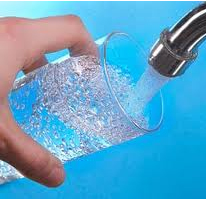
Maybe you haven't thought much about the water in your home or business—perhaps you just turn on the tap and don't think about where it comes from. Obviously, quality drinking water is important to our health and well-being. We use water daily throughout our homes for cooking, cleaning, bathing, laundry and a host of other purposes. But what determines high-quality water?
The hydrologic cycle moves water from the air to the earth and back again. Water is a natural solvent that dissolves everything it touches. As water passes through the earth to the water tables below, it carries with it substances such as:
- air pollution
- chemicals and detergents
- animal waste and bacteria
- fertilizers, pesticides, and herbicides
- waste water
- sulfur from smokestacks and lead from pipe solder
- hard minerals (calcium, iron, magnesium)
- other minerals (limestone, arsenic)
- and more...

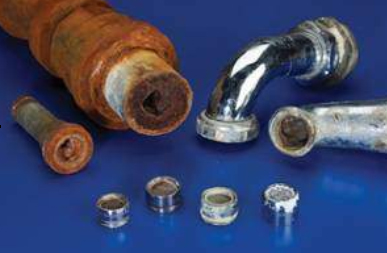
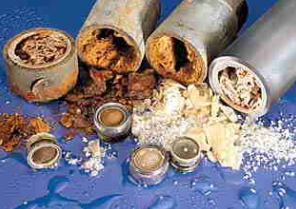
Due to all of the dissolved mineral content, the majority of our water is hard water. You can see and feel hard water:
- Scale in pipes, water heaters and other appliances reduces operational life
- Mineral spots on glasses
- Hard water stains, scum and scale on sinks, tubs, toilets and fixtures
- Dry, itchy skin from soap residue
- Dull-looking, dry hair
- Rough-feeling clothes and dull colors after washing
- Soaps don't lather as well: you need to use more soap, detergents and cleaning products – and your time - to get things truly clean

- The average household spends 6 hours each month cleaning the effects of scale, scum and hardness deposits throughout the home.
- 1/8" of scale in a water heater requires 20% more energy to operate.
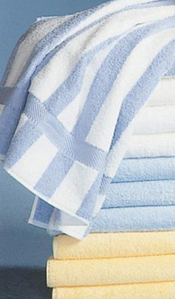
- The life of clothing, towels, sheets and other textiles is extended by 15% when washed in soft water.
- Water heaters using LP gas consume 30% more energy/BTU’s with hard water.
- 20% of supermarket expenses are for detergents, soaps, cleaning chemicals and personal products such as shampoos – products largely necessary due to the impacts of hard water.

- Save up to 70% in soap and detergent usage
- Save up to 65% in cleaning product usage
- Waste less hot water
- Reduce home energy expense
- Spend less time cleaning and shopping

Wouldn't bottled water solve all hard-water concerns? Not necessarily. The National Research Defense Council (NRDC) conducted a four-year review of the bottled water industry and the safety standards that govern it, including a comparison of national bottled water rules with national tap water rules, and independent testing of over 1,000 bottles of water. Their conclusion was that there is no assurance that just because water comes out of a bottle it is any cleaner or safer than water from the tap. And in fact, an estimated 25 percent or more of bottled water is really just tap water in a bottle – sometimes further treated, sometimes not.
Plus, a single 20-ounce bottle of water costing $1.50 would pay for about 1,000 gallons of municipal water – enough to fill the same bottle every day for 13 years. If you drink eight glasses of water each day – the amount most health experts advise – you'll spend about 49 cents per year for tap water. If you buy the same amount of bottled water, it will cost about $1400 per year, or 2900 times more.
Water softeners, in contrast, replaces hardness ions (calcium and magnesium) with "softness" (positively charged sodium ions).
Water softeners work as follows:
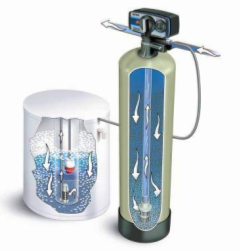
- The cation exchange process reduces the level of hardness in (softens) water through the use of a material called a "cation exchange resin."
- An ion is an electrically charged atom or group of atoms, and a cation is a positively charged ion.
- The resin used in most home water softeners contains sodium or potassium cations which can exchange with the hardness ions (calcium and magnesium) in your water as it passes over the resin.
- This exchange process removes the hardness ions and leaves them in the resin.
- The resin must be regenerated or “recharged” by passing a concentrated brine of sodium chloride or potassium chloride through the system.
- This process replaces the “hardness” (calcium and magnesium ions) previously filtered out of the water with “softness” (positively charged sodium ions), so the resin bed is ready to use again.

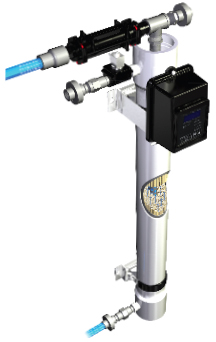
A softener will not solve every water quality concern in your home – even if your water is soft, it may still be contaminated in ways that are unsuitable for drinking and cooking purposes.
Typical homeowner water quality concerns beyond hardness include:
- Turbidity, cloudiness
- Sediment particles
- Chlorine taste & odor
- Lead
- Bacteria
- Chemicals
- Other aesthetic and health-related issues
While bottled water is perceived to be the most convenient choice by many, filtering/treating your home's tap water is just as convenient, plus it costs less, is better for the environment, and is just as good (if not better) for you!